Final Cut Express was a video editing software suite created by Apple Inc. It was the consumer version of Final Cut Pro and was designed for advanced editing of digital video as well as high-definition video, which was used by many amateur and professional videographers. Final Cut Express was considered a step above iMovie in terms of capabilities, but a step underneath Final Cut Pro and its suite of applications. As of June 21, 2011, Final Cut Express was discontinued in favor of Final Cut Pro X. == History == Final Cut Express 1.0, based on Final Cut Pro 3, was released at Macworld Conference and Expo in San Francisco in 2003. The second version, based on Final Cut Pro 4, was released at Macworld San Francisco in 2004. The third version, capable of editing high definition video, was also announced at Macworld San Francisco a year later, and was released as Final Cut Express HD in February 2005. It was based on Final Cut Pro HD (version 4.5) and included LiveType 1.2 and Soundtrack 1.2. Final Cut Express version 3.5 was released with little fanfare in May 2006 as a Universal Binary. In addition to improving real-time rendering with Dynamic RT, version 3.5 upgraded LiveType to version 2.0 and Soundtrack to version 1.5. In November 2007, Apple released Final Cut Express 4, which although it did not support real-time editing in the AVCHD format (it only allowed for transcoding AVCHD to Apple Intermediate Codec (AIC) provided that the camera was actually attached to the computer - it did not convert AVCHD files stored elsewhere and is currently for Intel processors only), imported iMovie '08 projects and included 50 new filters. It did not include Soundtrack 1.5, but it still included LiveType which enables users to create advanced text for the movies they created in Final Cut. The price was dropped from $299 for version 3.5 to $199 for version 4.0. In June 2011, Final Cut Express was officially discontinued, in favor of Final Cut Pro X. == Features == Final Cut Express' interface was identical to that of Final Cut Pro, but lacks some film-specific features, including Cinema Tools, multi-cam editing, batch capture, and a time code view. The program performed 32 undo operations, while Final Cut Pro did 99 [2]. Features the program did include were: The ability to keyframe filters Dynamic RT, which changes real-time settings on-the-fly Motion path keyframing Opacity keyframing Ripple, roll, slip, slide and blade edits Picture-in-picture and split-screen effects Up to 99 video tracks and 12 compositing modes Up to 99 audio tracks Motion project import Two-way color correction. Chroma key One feature of Final Cut Express that was not available in Final Cut Pro is the ability to import iMovie '08 projects (though transitions are not preserved). === RT Extreme === Inherited from Final Cut Pro, Final Cut Express features RT Extreme, which allows previews of some video filters and transitions without rendering. Audio that is not in the native AIFF file format needs rendering before it can be played back. RT Extreme has three modes: 'Safe', for seeing multiple video layers at a quality that more or less guarantees a smooth playback; 'Unlimited', which allows the maximum number of composited video layers to be viewed at the same time; and 'Dynamic', which alternates between these settings depending on how many simultaneous video tracks are present. Frame dropping may result from using 'Unlimited' on low-resource machines. === Boris Calligraphy === Like Final Cut Pro, Express also comes with Boris Calligraphy, a plugin for advanced titling and scrolling/crawling titles more sophisticated than the ones that can be created with the built-in title overlays. Calligraphy has a WYSIWYG interface and features wrapping, alignment, leading, kerning and tracking features, as well as allowing up to five custom outlines and five custom drop shadows to be defined for a selected portion of the title. == Soundtrack == Prior to version 4, Final Cut Express included Soundtrack 1.5, a music program similar to the consumer-level GarageBand, but designed for videographers who wish to add music to their films. Soundtrack comes with around 4,000 professionally recorded instrument loops and sound effects that can be arranged in multiple tracks beneath the video track. To use Soundtrack, users export their Final Cut Express sequence, or a marked portion thereof, as a reference file, which can include scoring markers defined in the timeline. This reference file can be imported as the video track in Soundtrack. Soundtrack is functionally and visually identical to Soundtrack Pro's multitrack editing mode, but includes fewer Logic plugins and lacks the highly regarded noise removal tool. Soundtrack was removed from Final Cut Express 4, which lowered its price and may have encouraged people to buy Logic Express.
Wetware computer
A wetware computer is an organic computer (which can also be known as an artificial organic brain or a neurocomputer) composed of organic material "wetware" such as "living" neurons. Wetware computers composed of neurons are different than conventional computers because they use biological materials, and offer the possibility of substantially more energy-efficient computing. While a wetware computer is still largely conceptual, there has been limited success with construction and prototyping, which has acted as a proof of the concept's realistic application to computing in the future. The most notable prototypes have stemmed from the research completed by biological engineer William Ditto during his time at the Georgia Institute of Technology. His work constructing a simple neurocomputer capable of basic addition from leech neurons in 1999 was a significant discovery for the concept. This research was a primary example driving interest in creating these artificially constructed, but still organic brains. == Origins and theoretical foundations == The term wetware came from cyberpunk fiction, notably through Gibson's Neuromancer, but was quickly taken up in scientific literature to explain computation by biological material. Theories of early biological computation borrowed from Alan Turing's morphogenesis model, which showed that chemical interactions could produce complex patterns without centralized control. Hopfield's associative memory networks also provided a foundation for biological information systems with fault tolerance and self-organization. == Major characteristics and processes == Biological wetware systems demonstrate dynamic reconfigurability underpinned by neuroplasticity and enable continuous learning and adaptation. Reaction-diffusion-based computing and molecular logic gates allow spatially parallel information processing unachievable in conventional systems. These systems also show fault tolerance and self-repair at the cellular and network level. The development of cerebral organoids—miniature lab-grown brains—demonstrates spontaneous learning behavior and suggests biological tissue as a viable computational substrate. == Overview == The concept of wetware is an application of specific interest to the field of computer manufacturing. Moore's law, which states that the number of transistors which can be placed on a silicon chip is doubled roughly every two years, has acted as a goal for the industry for decades, but as the size of computers continues to decrease, the ability to meet this goal has become more difficult, threatening to reach a plateau. Due to the difficulty in reducing the size of computers because of size limitations of transistors and integrated circuits, wetware provides an unconventional alternative. A wetware computer composed of neurons is an ideal concept because, unlike conventional materials which operate in binary (on/off), a neuron can shift between thousands of states, constantly altering its chemical conformation, and redirecting electrical pulses through over 200,000 channels in any of its many synaptic connections. Because of this large difference in the possible settings for any one neuron, compared to the binary limitations of conventional computers, the space limitations are far fewer. == Background == The concept of wetware is distinct and unconventional and draws slight resonance with both hardware and software from conventional computers. While hardware is understood as the physical architecture of traditional computational devices, comprising integrated circuits and supporting infrastructure, software represents the encoded architecture of storage and instructions. Wetware is a separate concept that uses the formation of organic molecules, mostly complex cellular structures (such as neurons), to create a computational device such as a computer. In wetware, the ideas of hardware and software are intertwined and interdependent. The molecular and chemical composition of the organic or biological structure would represent not only the physical structure of the wetware but also the software, being continually reprogrammed by the discrete shifts in electrical pulses and chemical concentration gradients as the molecules change their structures to communicate signals. The responsiveness of a cell, proteins, and molecules to changing conformations, both within their structures and around them, ties the idea of internal programming and external structure together in a way that is alien to the current model of conventional computer architecture. The structure of wetware represents a model where the external structure and internal programming are interdependent and unified; meaning that changes to the programming or internal communication between molecules of the device would represent a physical change in the structure. The dynamic nature of wetware borrows from the function of complex cellular structures in biological organisms. The combination of "hardware" and "software" into one dynamic, and interdependent system which uses organic molecules and complexes to create an unconventional model for computational devices is a specific example of applied biorobotics. === The cell as a model of wetware === Cells in many ways can be seen as their form of naturally occurring wetware, similar to the concept that the human brain is the preexisting model system for complex wetware. In his book Wetware: A Computer in Every Living Cell (2009) Dennis Bray explains his theory that cells, which are the most basic form of life, are just a highly complex computational structure, like a computer. To simplify one of his arguments a cell can be seen as a type of computer, using its structured architecture. In this architecture, much like a traditional computer, many smaller components operate in tandem to receive input, process the information, and compute an output. In an overly simplified, non-technical analysis, cellular function can be broken into the following components: Information and instructions for execution are stored as DNA in the cell, RNA acts as a source for distinctly encoded input, processed by ribosomes and other transcription factors to access and process the DNA and to output a protein. Bray's argument in favor of viewing cells and cellular structures as models of natural computational devices is important when considering the more applied theories of wetware to biorobotics. === Biorobotics === Wetware and biorobotics are closely related concepts, which both borrow from similar overall principles. A biorobotic structure can be defined as a system modeled from a preexisting organic complex or model such as cells (neurons) or more complex structures like organs (brain) or whole organisms. Unlike wetware, the concept of biorobotics is not always a system composed of organic molecules, but instead could be composed of conventional material which is designed and assembled in a structure similar or derived from a biological model. Biorobotics have many applications and are used to address the challenges of conventional computer architecture. Conceptually, designing a program, robot, or computational device after a preexisting biological model such as a cell, or even a whole organism, provides the engineer or programmer the benefits of incorporating into the structure the evolutionary advantages of the model. == Effects on users == Wetware technologies such as BCIs and neuromorphic chips offer new possibilities for user autonomy. For those with disabilities, such systems could restore motor or sensory functions and enhance quality of life. However, these technologies raise ethical questions: cognitive privacy, consent over biological data, and risk of exploitation. Without proper oversight, wetware technologies may also widen inequality, favoring those with access to cognitive enhancements. Open governance frameworks and ethical AI design grounded in neuro ethics will be essential. With the development of wetware devices, disparities in access could exacerbate social inequalities, benefiting those who have resources to enhance cognitive or physical abilities. It is necessary to create strong ethical frameworks, inclusive development practices, and open systems of governance to reduce risks and make sure that wetware advances are beneficial to all segments of society. == Applications and goals == === Basic neurocomputer composed of leech neurons === In 1999 William Ditto and his team of researchers at Georgia Institute of Technology and Emory University created a basic form of a wetware computer capable of simple addition by harnessing leech neurons. Leeches were used as a model organism due to the large size of their neuron, and the ease associated with their collection and manipulation. However, these results have never been published in a peer-reviewed journal, prompting questions about the validity of the claims. The computer was able to complete basic addition through electrical probes
Be My Eyes
Be My Eyes is a Danish mobile app that aims to help blind and visually impaired people to recognize objects and manage everyday situations. An online community of sighted volunteers receive photos or videos from randomly assigned affected individuals and assist via live chat. In 2023, the company launched Be My AI, an AI-based interface to help blind and visually impaired users describe images. The app is currently available for Android, iOS, and Windows. == History == === Founding and early years === The app was developed and marketed by Hans Jørgen Wiberg. He had demonstrated that although there are video chat software such as Skype and FaceTime, none is tailored for the visually impaired. For development, he joined forces with the Danish Association of the Blind, and other organizations. The app was first presented at an event for start-up companies in 2012 and first released in 2015. A version for Android was released in 2017, in addition to the iOS version. Praise was given for easy use of the app. The lack of sufficient data protection, which makes it possible to pass on data to third parties, was criticized. === Recent developments === The company has raised over $650,000, including funding from Silicon Valley, Microsoft, and other angel investors. In February 2020, $2.8 million in Series A funding was raised, allowing the company to further develop its business model while keeping visual support services free for visually impaired users. The investment allows the company to further develop its unique "purpose and profit" business model while keeping the visual support service free and unlimited for all visually impaired users. === User base and accessibility === Over 9.3 million volunteers and 900,000 blind or visually impaired people use the app. == Features == === Human-based assistance === A visually impaired person starts a live stream showing their view from their cellphone camera. They are assigned, through a phone call or chat, a random volunteer who speaks the same language and who is in the same time zone. This allows the volunteer to describe an object and assist the visually impaired person, such as guiding the person to move their camera, read instructions, or clean up a spill. Through speech synthesis, content can be read out loud. This process encourages a more independent life for blind and visually impaired people. === Be My AI === In March of 2023, Be My Eyes launched Be My AI, an AI-based virtual assistant. Be My AI is accessible through the Be My Eyes app, and is based on OpenAI's GPT-4 large language model. Through the interface, the app allows blind and visually impaired users to send images from a variety of devices to be described. The app allows users to then follow up with questions to further tailor the image description. Blind users report using Be My AI for a variety of tasks, including reading menus, identifying clothing, and describing people. The Be My AI interface is available on Android, iOS, and Windows. Within a few weeks of the interface's roll out, the company reported that it had been used one million times, and it was named among Time's best inventions of 2023. Be My AI is part of a growing number of AI-based apps and devices designed to help blind and visually impaired individuals. == Partnerships == === Microsoft === In November 2023, Be My Eyes entered a partnership with Microsoft to share data to help improve accessibility-focused AI models. === Meta === In 2024, Be My Eyes integrated with Ray-Ban Meta smart glasses, a wearable product developed by Meta and EssilorLuxottica. The partnership enabled users to receive hands-free, real-time visual descriptions and volunteer assistance by using voice commands through the smart glasses. === Hilton === In October 2024, Hilton partnered with Be My Eyes to provide live video assistance for blind and low-vision guests. The free service connects travelers to a Hilton team member that can guide them through tasks like adjusting thermostats, opening window shades, or navigating hotel amenities. This collaboration progressed from a prior arrangement where Hilton helped train Be My Eyes' GPT-4 powered AI model to better recognize objects and layouts in hotel rooms. === Tesco === In October 2025, retailer Tesco announced its partnership with Be My Eyes to launch a six-month pilot aimed at improving in-store accessibility in the UK. The initiative was launched on World Sight Day, 9 October, enabling Be My Eyes users to connect directly with Tesco staff via the app for personalised visual assistance while shopping, Euronewsweek reported. == Awards == Nordic Startup Awards for "Best Social Entrepreneurial Tech Startup" in Denmark 2021 Apple Design Award for best social impact
Cups (app)
Cups (stylized as CUPS) was a mobile app launched in New York City in April 2014. It was a mobile payment and discovery platform for independent coffee shops nearby. The app was active in more than 400 cafes in New York, San Francisco, Philadelphia, Nashville, Minneapolis and Saint Paul, and other U.S. cities. == History == Cups was founded in Israel in 2012 by Gilad Rotem and four other co-founders, who were all high school friends. The company ran a limited beta pilot in Tel Aviv and Jerusalem, featuring 80 locations, from September 2012 until September 2014. Customers received all-you-can-drink coffee at certain coffee shops in Tel Aviv for approximately $45 a month. In October 2013, the founders relocated to New York. Cups participated in the Entrepreneur's Roundtable Accelerator program and went live in New York in 2014, initially working with 50 small coffee shops in Manhattan and Brooklyn. In early 2016, the company launched 30 locations in Philadelphia in February, followed by 40 more locations in San Francisco in March. == Functionality == The Cups app gave the user a list of the nearest participating coffee shops to their current location. The app user can order a drink using the app and pay the cashier with their phone. The cashier would enter a code that entered the purchase into the app's system. The app also allowed for onboard tipping and food purchases. The company reimbursed the coffee shop and kept a portion of their sales. In early 2016, the Cups Café Network was launched, using bulk purchasing power to land discounts with service providers which would normally be reserved for larger chains. In this way, the company aimed to help its café partners compete with the larger coffee chains.
Tiimo
Tiimo is an app designed to help neurodivergent individuals with planning their life. In August 2024 the company raised €1.4 million, bringing their total funding to €4.3 million. At that point they had over 500,000 users, including 50,000 paid users. The app has Apple Watch support and a learning platform that includes courses on well-being and neurodiversity. The app was founded by Helene Lassen Nørlem and Melissa Würtz Azari in 2015. After being a finalist in 2024, in December 2025 Tiimo was won Apple’s iPhone App of the Year. The premium version is $10/mo and features an AI chatbot alongside the daily planner.
Autonomous agent
An autonomous agent is an artificial intelligence (AI) system that can perform complex tasks independently. == Definitions == There are various definitions of autonomous agent. According to Brustoloni (1991): "Autonomous agents are systems capable of autonomous, purposeful action in the real world." According to Maes (1995): "Autonomous agents are computational systems that inhabit some complex dynamic environment, sense and act autonomously in this environment, and by doing so realize a set of goals or tasks for which they are designed." Franklin and Graesser (1997) review different definitions and propose their definition: "An autonomous agent is a system situated within and a part of an environment that senses that environment and acts on it, over time, in pursuit of its own agenda and so as to effect what it senses in the future." They explain that: "Humans and some animals are at the high end of being an agent, with multiple, conflicting drives, multiples senses, multiple possible actions, and complex sophisticated control structures. At the low end, with one or two senses, a single action, and an absurdly simple control structure we find a thermostat." == Agent appearance == Lee et al. (2015) post safety issue from how the combination of external appearance and internal autonomous agent have impact on human reaction about autonomous vehicles. Their study explores the human-like appearance agent and high level of autonomy are strongly correlated with social presence, intelligence, safety and trustworthiness. In specific, appearance impacts most on affective trust while autonomy impacts most on both affective and cognitive domain of trust where cognitive trust is characterized by knowledge-based factors and affective trust is largely emotion driven. == Applications == Agentic AI systems: Advanced AI agents that can scope out projects and complete them with necessary tools, representing a significant evolution from simple task-oriented systems. Internet of things (IoT) Integration: Autonomous agents increasingly interact with IoT devices, enabling smart home systems, industrial monitoring, and urban infrastructure management. Collaborative software development: Tools like Cognition AI's Devin aim to create autonomous software engineers capable of complex reasoning, planning, and completing engineering tasks requiring thousands of decisions. Enterprise automation: Business process automation platforms like Salesforce's Agentforce provide autonomous bots for various service functions. == Challenges and considerations == Uncertainty and incomplete information: Autonomous agents must make decisions with limited or uncertain information about their environment and future states. Integration complexity: Incorporating autonomous agents into existing systems and workflows can be technically challenging and resource-intensive. Scalability: As systems become more complex and more agents are used, maintaining coordination and avoiding conflicts becomes increasingly difficult. Trust: Research has shown the combination of external appearance and internal autonomous capabilities significantly impacts human reactions and trust. Lee et al. (2015) found that human-like appearance and high levels of autonomy are strongly correlated with social presence, intelligence, safety, and trustworthiness perceptions. Specifically, appearance impacts affective trust most significantly, while autonomy affects both affective and cognitive trust domains, where affective trust is emotionally driven, and cognitive trust is characterized by knowledge-based factors. Vulnerability to manipulation: Researchers from Harvard, MIT and other educational institutions found that AI agents could become vulnerable to manipulation and could perform detrimental actions in the process of being helpful. == Ethical and regulatory concerns == Accountability: Determining responsibility when autonomous agents make incorrect or harmful decisions remains a complex issue. Privacy and security: autonomous agents often require access to sensitive data, raising concerns about data protection and system security.
Automaton
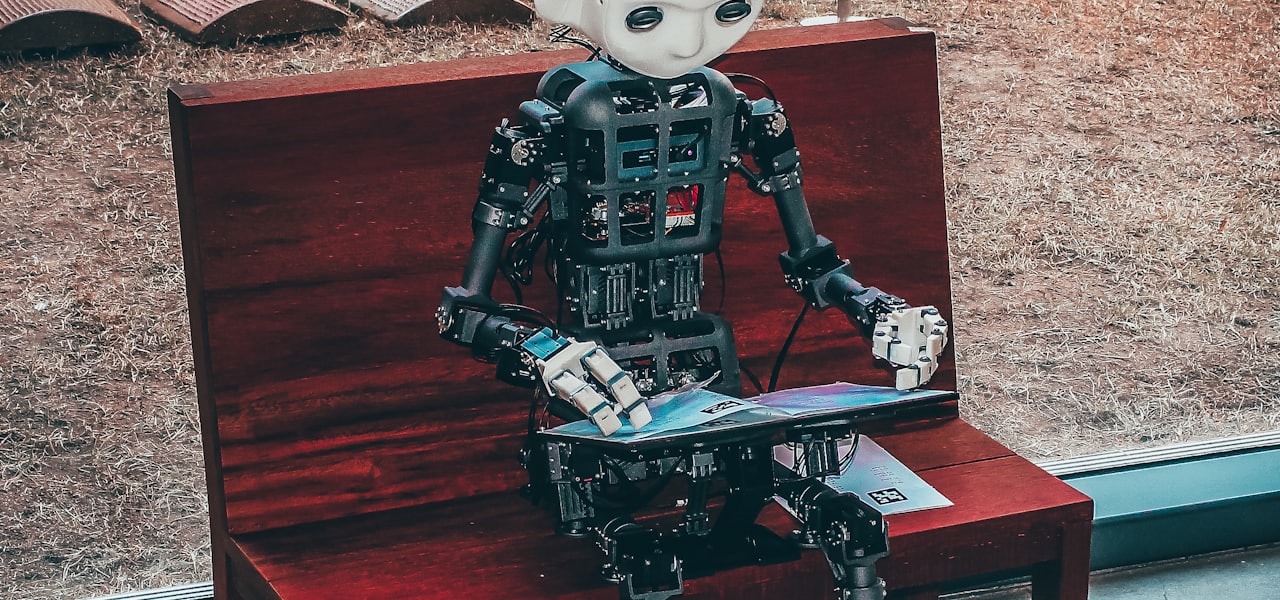
An automaton ( ; pl.: automata or automatons) is a relatively self-operating machine or control mechanism designed to automatically follow a sequence of operations or respond to predetermined instructions. Some automata, such as bellstrikers in mechanical clocks, are designed to give the illusion to the casual observer that they are operating under their own power or will, like a mechanical robot. The term has long been commonly associated with automated puppets that resemble moving humans or animals, built to impress and/or to entertain people. Animatronics are a modern type of automata with electronics, often used for the portrayal of characters or creatures in films and in theme park attractions. == Etymology == The word automaton is the latinization of the Ancient Greek automaton (αὐτόματον), which means "acting of one's own will". It was first used by Homer to describe an automatic door opening, or automatic movement of wheeled tripods. It is more often used to describe non-electronic moving machines, especially those that have been made to resemble human or animal actions, such as the jacks on old public striking clocks, or the cuckoo and any other animated figures on a cuckoo clock. == History == === Ancient === There are many examples of automata in Greek mythology: Hephaestus created automata for his workshop; Talos was an artificial man of bronze; King Alkinous of the Phaiakians employed gold and silver watchdogs. According to Aristotle, Daedalus used quicksilver to make his wooden statue of Aphrodite move. In other Greek legends he used quicksilver to install voice in his moving statues. The automata in the Hellenistic world were intended as tools, toys, religious spectacles, or prototypes for demonstrating basic scientific principles. Numerous water-powered automata were built by Ktesibios, a Greek inventor and the first head of the Great Library of Alexandria; for example, he "used water to sound a whistle and make a model owl move. He had invented the world's first 'cuckoo clock'". This tradition continued in Alexandria with inventors such as the Greek mathematician Hero of Alexandria (sometimes known as Heron), whose writings on hydraulics, pneumatics, and mechanics described siphons, a fire engine, a water organ, the aeolipile, and a programmable cart. Philo of Byzantium was famous for his inventions. Complex mechanical devices are known to have existed in Hellenistic Greece, though the only surviving example is the Antikythera mechanism, the earliest known analog computer. The clockwork is thought to have come originally from Rhodes, where there was apparently a tradition of mechanical engineering; the island was renowned for its automata; to quote Pindar's seventh Olympic Ode: The animated figures stand Adorning every public street And seem to breathe in stone, or move their marble feet. However, the information gleaned from recent scans of the fragments indicate that it may have come from the colonies of Corinth in Sicily and implies a connection with Archimedes. According to Jewish legend, King Solomon used his wisdom to design a throne with mechanical animals which hailed him as king when he ascended it; upon sitting down an eagle would place a crown upon his head, and a dove would bring him a Torah scroll. It is also said that when King Solomon stepped upon the throne, a mechanism was set in motion. As soon as he stepped upon the first step, a golden ox and a golden lion each stretched out one foot to support him and help him rise to the next step. On each side, the animals helped the King up until he was comfortably seated upon the throne. In ancient China, a curious account of automata is found in the Lie Zi text, believed to have originated around 400 BCE and compiled around the fourth century CE. Within it there is a description of a much earlier encounter between King Mu of Zhou (1023–957 BCE) and a mechanical engineer known as Yan Shi, an 'artificer'. The latter proudly presented the king with a very realistic and detailed life-size, human-shaped figure of his mechanical handiwork: The king stared at the figure in astonishment. It walked with rapid strides, moving its head up and down, so that anyone would have taken it for a live human being. The artificer touched its chin, and it began singing, perfectly in tune. He touched its hand, and it began posturing, keeping perfect time...As the performance was drawing to an end, the robot winked its eye and made advances to the ladies in attendance, whereupon the king became incensed and would have had Yen Shih [Yan Shi] executed on the spot had not the latter, in mortal fear, instantly taken the robot to pieces to let him see what it really was. And, indeed, it turned out to be only a construction of leather, wood, glue and lacquer, variously coloured white, black, red and blue. Examining it closely, the king found all the internal organs complete—liver, gall, heart, lungs, spleen, kidneys, stomach and intestines; and over these again, muscles, bones and limbs with their joints, skin, teeth and hair, all of them artificial...The king tried the effect of taking away the heart, and found that the mouth could no longer speak; he took away the liver and the eyes could no longer see; he took away the kidneys and the legs lost their power of locomotion. The king was delighted. Other notable examples of automata include Archytas' dove, mentioned by Aulus Gellius. Similar Chinese accounts of flying automata are written of the 5th century BC Mohist philosopher Mozi and his contemporary Lu Ban, who made artificial wooden birds (ma yuan) that could successfully fly according to the Han Fei Zi and other texts. === Medieval === The manufacturing tradition of automata continued in the Greek world well into the Middle Ages. On his visit to Constantinople in 949 ambassador Liutprand of Cremona described automata in the emperor Theophilos' palace, including "lions, made either of bronze or wood covered with gold, which struck the ground with their tails and roared with open mouth and quivering tongue," "a tree of gilded bronze, its branches filled with birds, likewise made of bronze gilded over, and these emitted cries appropriate to their species" and "the emperor's throne" itself, which "was made in such a cunning manner that at one moment it was down on the ground, while at another it rose higher and was to be seen up in the air." Similar automata in the throne room (singing birds, roaring and moving lions) were described by Luitprand's contemporary the Byzantine emperor Constantine Porphyrogenitus, in his book De Ceremoniis (Perì tês Basileíou Tákseōs). In the mid-8th century, the first wind powered automata were built: "statues that turned with the wind over the domes of the four gates and the palace complex of the Round City of Baghdad". The "public spectacle of wind-powered statues had its private counterpart in the 'Abbasid palaces where automata of various types were predominantly displayed." Also in the 8th century, the Muslim alchemist, Jābir ibn Hayyān (Geber), included recipes for constructing artificial snakes, scorpions, and humans that would be subject to their creator's control in his coded Book of Stones. In 827, Abbasid caliph al-Ma'mun had a silver and golden tree in his palace in Baghdad, which had the features of an automatic machine. There were metal birds that sang automatically on the swinging branches of this tree built by Muslim inventors and engineers. The Abbasid caliph al-Muqtadir also had a silver and golden tree in his palace in Baghdad in 917, with birds on it flapping their wings and singing. In the 9th century, the Banū Mūsā brothers invented a programmable automatic flute player and which they described in their Book of Ingenious Devices. Al-Jazari described complex programmable humanoid automata amongst other machines he designed and constructed in the Book of Knowledge of Ingenious Mechanical Devices in 1206. His automaton was a boat with four automatic musicians that floated on a lake to entertain guests at royal drinking parties. His mechanism had a programmable drum machine with pegs (cams) that bump into little levers that operate the percussion. The drummer could be made to play different rhythms and drum patterns if the pegs were moved around. Al-Jazari constructed a hand washing automaton first employing the flush mechanism now used in modern toilets. It features a female automaton standing by a basin filled with water. When the user pulls the lever, the water drains and the automaton refills the basin. His "peacock fountain" was another more sophisticated hand washing device featuring humanoid automata as servants who offer soap and towels. Mark E. Rosheim describes it as follows: "Pulling a plug on the peacock's tail releases water out of the beak; as the dirty water from the basin fills the hollow base a float rises and actuates a linkage which makes a servant figure appear from behind a door under the peacock and offer soap.